

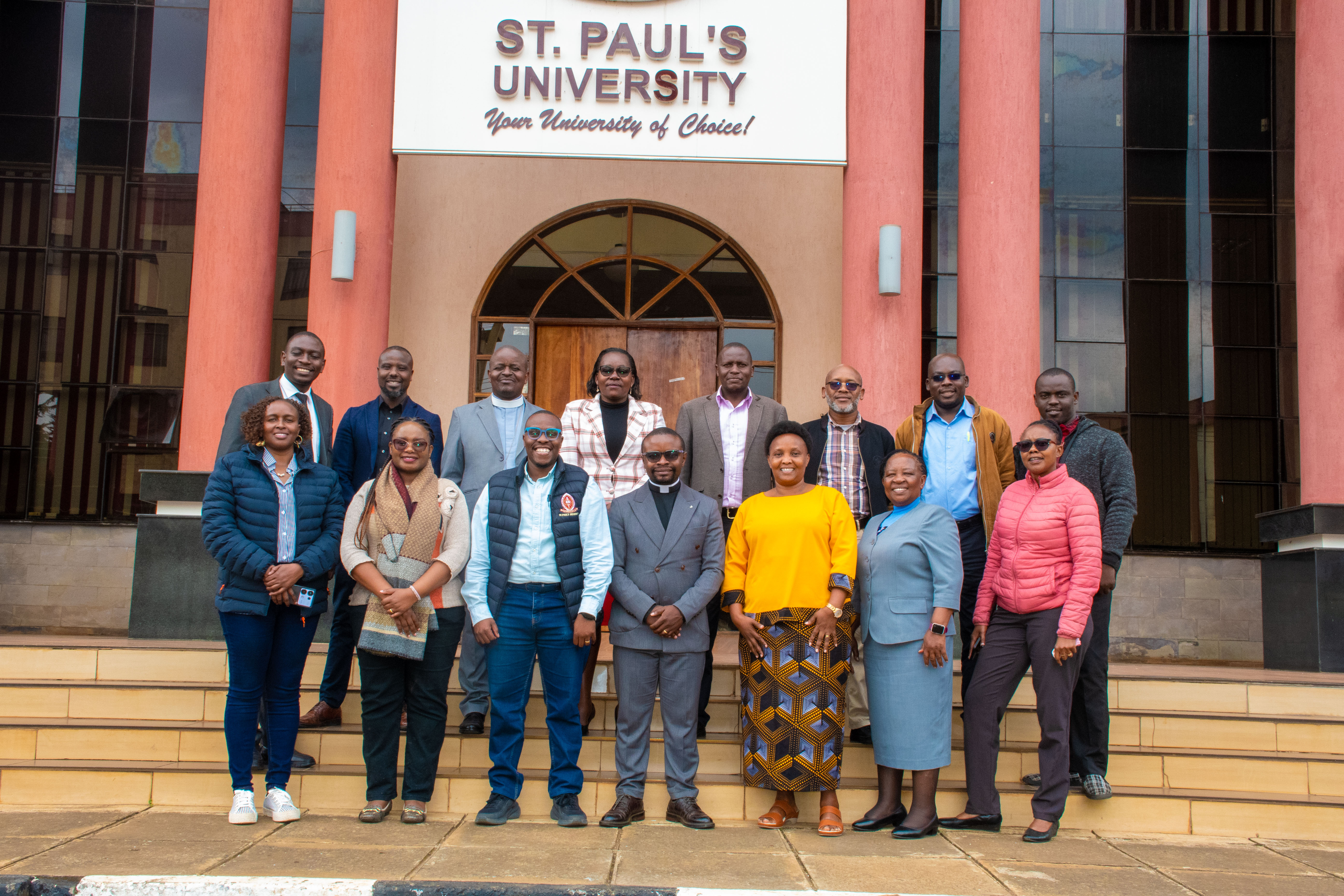
Through the Directorate of Research and Innovation, St. Paul’s University (SPU) is advancing a distinctive research agenda that connects scholarship, innovation and community needs. Under the project “Spiritual Capital and Youth Innovation in an Age of Economic Anxiety” funded by the Templeton Religion Trust via Grant Number TRT-2025-35778, shortlisted proposals for postgraduate research scholarships bring theology into conversation with psychology, entrepreneurship, digital heritage and everyday economic challenges. Together, they demonstrate how St. Paul’s university is leading through research that asks locally grounded questions while opening new possibilities for public engagement and postgraduate learning.
The agenda for the Templeton Religion Trust proposal presentation meeting on 16 October 2026 brought together three internal sub-granted project proposals and nine postgraduate proposals. Its combination of presentations and panel feedback, at this early stages of the research projects placed research development alongside accountability. Rather than treating student research as an isolated academic exercise, this platform connects emerging scholarship with a shared thematic programme and opportunities for constructive exchange.
Supporting Early Career Research: Digital Archives, Developmental Science and Chaplaincy Innovation
Among the distinctive internal proposals, Irene Kibandi and Damaris Wambugu’s “Digitizing the Ecumenical Memory” envisages a pilot archive digitisation and decolonial church history project for SPU’s trustee churches. Mbutu Kariuki’s psycho-theological study explores cultivation, spiritual capital and flourishing among young innovators in Kenya. Duncan Mugambi’s proposal examines chaplaincy as innovative ministry, focusing on spiritual virtues and safeguarding youth mental health. These projects broaden the meaning of innovation beyond technology alone to include heritage, human development and care.
Strengthening Postgraduate Students’ Research: Sports and Faith-Based Entrepreneurship
Postgraduate proposals extend this interdisciplinary approach. PhD Theology student Kasereka Wamunyu Victoire explores football as youth missional innovation and a pathway for contextual thinking about church unity and ecumenical leadership in Kiambu County. MTh student Daniel Muhia Gathogo investigates faith-based entrepreneurship and marketplace discipleship in Kenya. Master’s in business studies student Paul Wahome Gichangi examines predatory lending and household finances in Nairobi, bringing the pressures behind economic anxiety into the research conversation. Their proposed studies connect innovative practices with questions of participation, livelihoods and community life.
Responding to the Mental Health Crises
Mental health is another strong thread. Jacqueline Kang’ori proposes integrating faith, African culture and psychological science in contextualised church ministry that bridges African/Gikuyu indigenous knowledge systems into conversation with scriptural foundations for mental health. M.A. Counselling Psychology student Nancy Wanjiku Kahindo examines spirituality and youth mental health resilience in Embu, while Pius Mogeni Wako explores pastoral responses to adolescent anxiety in Nairobi’s urban churches. PhD in Development Studies student Bahati Gatere explores parental leadership and its influence on strengthening the emotional resilience of the hearing-impaired youth. These studies aim to generate context-sensitive understanding that could inform community support. Their anticipated contribution should be understood as a research ambition, not yet as evidence of achieved outcomes.
Creating an Interdisciplinary Research Mentorship Ecosystem
SPU’s support for the next generation of researchers is also reflected in the early-career workshop scheduled for 19–23 October 2026 titled “Navigating the African Academy”. Alongside postgraduate proposal presentations and panel feedback, the workshop signals attention to researchers’ development as well as their projects. The programme creates space for emerging researchers to participate in an institutional conversation about rigorous, relevant scholarship and its relationship to communities. The researchers are being supported by more advanced researchers including the Rev. Dr. Kevin M. Ndereba, Dr. Mary Githinji, Dr. Daniel Nzengya, and Dr. Lisy Mutua, representing the different expertise in the various Schools.
Through this program, SPU presents a compelling model of research leadership: interdisciplinary inquiry rooted in real settings, opportunities for postgraduate and early-career participation, hands-on mentorship, and a focus on potential community benefit. As the proposals develop, the challenge and opportunity will be to translate their questions into credible evidence that helps communities navigate uncertainty and nurture innovation.