

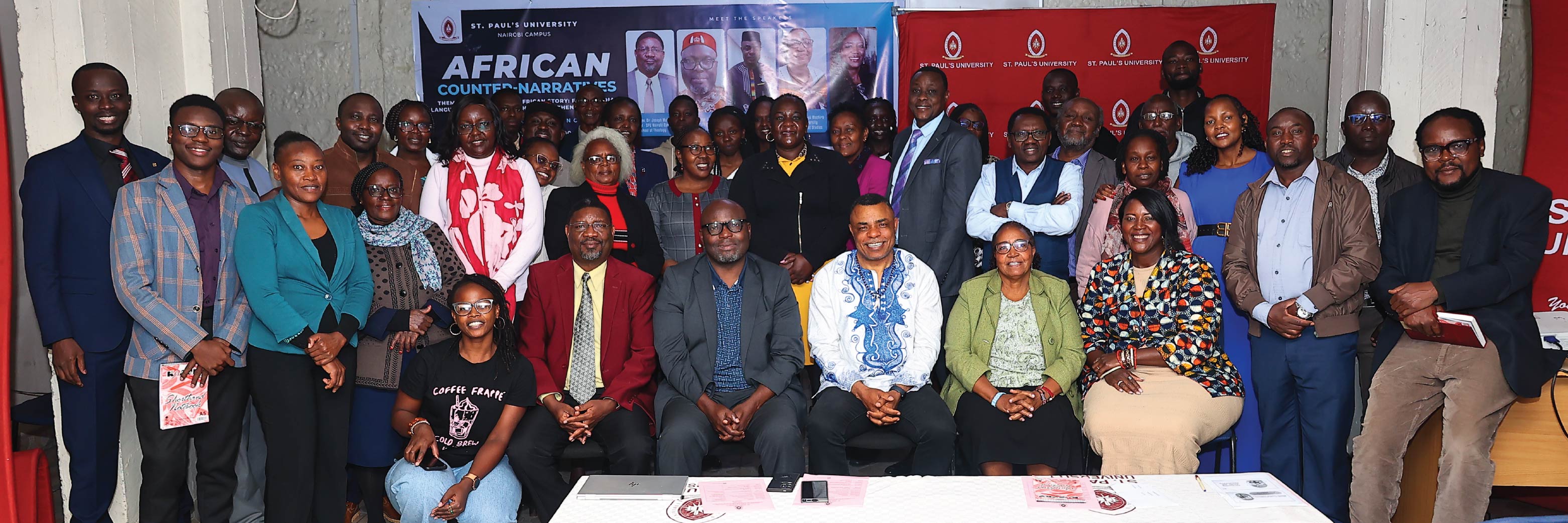
St. Paul’s University Nairobi Campus recently hosted the African Counter Narrative Conference, bringing together distinguished scholars, researchers, academics, and thought leaders from across Africa to engage in critical conversations on the power of storytelling in shaping the continent’s identity, image, and future. The conference provided a timely platform for intellectual engagement on how Africa is represented in local and global narratives. As the world becomes increasingly interconnected, participants reflected on the importance of ensuring that African stories are told by Africans and from African perspectives. Throughout the discussions, speakers emphasized that narratives are not merely stories; they influence perceptions, policies, development priorities, and how communities understand themselves.
The event centred on the growing need to challenge dominant narratives that have historically portrayed Africa through narrow lenses of conflict, poverty, and dependency. Participants explored how communication, culture, language, media, and education can be leveraged to present a more balanced and authentic picture of the continent one that highlights resilience, innovation, diversity, and the richness of African heritage. Through thought-provoking keynote presentations and interactive panel discussions, delegates examined the role of scholars, journalists, educators, faith leaders, and policymakers in shaping public discourse. A recurring theme throughout the conference was the responsibility of African institutions and intellectuals to preserve indigenous knowledge systems, promote African languages, and safeguard cultural identities that continue to define communities across the continent.
The conference also underscored the importance of research and scholarship in advancing African-centred perspectives. Participants noted that academic institutions have a crucial role to play in generating knowledge that reflects local realities while contributing meaningfully to global conversations. By producing research grounded in African experiences, scholars can help counter stereotypes and enrich international understanding of the continent. SPU was honoured to host renowned scholars Professor Victor Gomia and Professor Kehbuma Langmia, whose presentations enriched the conference and inspired robust discussions among participants. Drawing from their extensive academic and professional experiences, the two scholars challenged attendees to critically examine prevailing narratives and contribute to the development of knowledge frameworks that accurately represent African realities.
Their insights encouraged participants to view storytelling as a transformative tool capable of shaping societal attitudes, fostering inclusion, and empowering communities. The discussions highlighted that reclaiming Africa’s voice requires intentional efforts to amplify diverse perspectives and create spaces where authentic African experiences can be shared and celebrated.
Beyond the academic discussions, the conference served as a reminder of the power of collaboration among scholars and institutions committed to advancing African scholarship. It created opportunities for networking, knowledge exchange, and the formation of partnerships that can further strengthen research and dialogue on issues affecting the continent.
As the conference concluded, participants left with a renewed commitment to promoting narratives that reflect Africa’s complexity, strengths, and aspirations. The conversations reaffirmed that authentic storytelling is essential in preserving cultural heritage, shaping positive perceptions, and ensuring that Africa’s voice remains central in discussions about its future.
By hosting the African Counter Narrative Conference, SPU continues to demonstrate its commitment to fostering intellectual discourse, promoting research excellence, and creating platforms that empower scholars to contribute meaningfully to societal transformation. The conference not only challenged existing narratives but also inspired a collective vision of an Africa that confidently tells its own story and shapes its own destiny.